Words to represent guitar chords. A letter, a number, or a symbol to write them down. New notation systems emerged in Italy and Spain in the 16th and 17th centuries. These systems created a bridge between the literate and popular classes, connecting those with a musical education to those with only basic knowledge. They enriched the repertoire for the general public, giving them access to new pieces and other forms of musical reappropriation. One of these systems prospered more than the others and spread beyond its region of origin: the Italian alfabeto.
Between art and popular music, Labadaude invites you to discover the figure of a 17th-century singer-guitarist through a program that highlights a selection of Italian pieces composed using the alfabeto. These works, from early editions of the time and the years when they were in vogue, offer a musical journey through Naples, Venice, Rome, and Parma.
Composers
Music by Biagio Marini, Francesca Caccini, Flaminio Corradi, Stefano Landi, Andrea Falconieri, Giovanni Bassano, Domenico Obizzi, Johannes Hieronymus Kapsperger, Alessandro Piccinini.
Instruments
Recorders and violone, theorbo and guitar, contralto voice, triple harp.
Mariposas means butterflies in Spanish. The butterfly is an animal that lives multiple lives. Both terrestrial and aerial, with an unpredictable flight, it fascinates. Its colors, patterns, and gracefulness capture attention. Its impressive metamorphosis, which can sometimes take several years, amazes and inspires dreams. In this program, we sought to recreate a palette of the musical colors of 17th-century Spain. A lively music, sometimes surprising, with varied shades. Labadaude offers, in the span of a concert, a glimpse of a certain spirit present in Baroque Spain. A spirit where theater, music, and dance intertwine, where butterflies embody the human soul, where nightingales console with their song, where trees live happily, unconcerned with the miseries of the earth, where the world seems to resonate in harmony with human passions and spirituality.
Composers
Arrangements and music by José Marín, Cristóbal Galán, Juan Hidalgo, Diego Gómez, Henri Du Bailly, Santiago de Murcia, Johannes Hieronymus Kapsperger.
This program is an invitation to discovery. The audience is taken on an imaginary day in which several musical scenes take place, in the middle of the Baroque period, beyond physical borders. Like a piece of descriptive music, this selection echoes the musical diversity of Baroque Europe, a succinct description of its richness and dynamism.
Composers
Music by Athanasius Kircher, Georg Friedrich Haendel, Henry Purcell, Alessandro Piccinini, Santiago de Murcia, Tobias Hume, Marin Marais, Gottfried Finger, William Byrd, Johann Gottfried Walther, arrangements of traditional Irish and Manx tunes.
Instruments
Bass and treble viola da gamba, violone, harpsichord, theorbo and guitar, recorders.
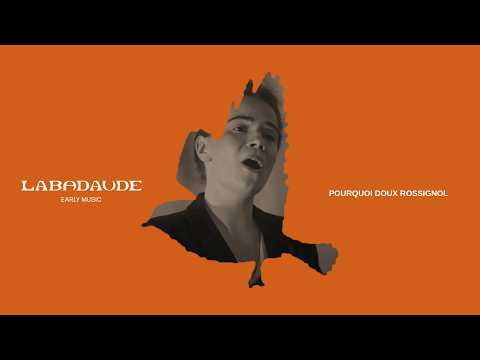
A nightingale awakens her, bringing news. She listens, replies, arranges her hair, remembers her sorrows, and sings her grief. The air de cour is a secular musical genre, quintessentially French, that flourished in aristocratic circles in the late 16th and 17th centuries. This repertoire, comprising over three thousand pieces, is characterized by its refined exploration of human passions. Love is its primary theme, while patience, suffering, despair, and resignation are its ever-present consequences. The structure of these pieces is strophic, and their musical palette is enriched by elements of popular culture and foreign influences, particularly Italian ones. Through the dialogue between a nightingale and a despairing lover, we guide the audience on a lyrical journey, delving into the customs and codes of one of the privileged literary circles of 17th-century France.
Composers
Music by Michel Lambert, Jean-Baptiste and Antoine Boësset, Jean-Philippe Rameau, Étienne Moulinié, Charles Dieupart, Joseph Chabanceau de La Barre, François Couperin, Honoré d'Ambruis, Françoise-Charlotte de Ménétou.
Instruments
Recorders and violone, violas da gamba, harpsichord, theorbo and guitar, soprano voice.
Au Boulot! is a show created by Cindy Room Company and Labadaude, combining puppetry, baroque music, and live sound effects. The project was born from a desire to bring together two traditional practices and reimagine them in a contemporary form that is accessible to all audiences and adaptable to a wide variety of spaces. Early music and glove puppetry meet here in a rare, playful dialogue that encourages discovery of both disciplines by audiences of all ages. To achieve this, Au Boulot! follows the adventures of four workers who, perched high on their scaffolding, do their best to carry out their task, navigating between small mishaps and intense emotions, between pop culture and Shakespearean drama, all set to period music. Of course, this is less a story about a construction site than about the construction of our own lives. In short, building a shared future is not always easy. The show offers multiple layers of interpretation and is conceived for both children and adults, with the intention of touring and performing in unexpected, non-traditional venues—such as schools—as well as in theatres. The aim is to be an all-terrain production: an unconventional artistic proposal that challenges and reshapes the way audiences perceive our respective disciplines.
Technical rider
Frontal show, created for both indoor and outdoor performances, suitable for non-traditional venues
Audience capacity: from 25 to 200 people
2 to 3 performances possible per day
Accessible to deaf and hard-of-hearing audiences
Full technical autonomy for non-equipped venues and outdoor spaces
Touring team: 4 people (2 puppeteers, 2 musicians)
Scenography size (puppet booth): 1.5 m wide × 0.9 m deep × 2 m high
Ideal playing area: 5 × 5 m (minimum 4 × 4 m)
Minimum ceiling height: 3 m
Audience seated on chairs: minimum 2 m between the puppet booth and the audience
Audience seated on the floor: minimum 3 m between the puppet booth and the audience
Adaptations can be considered for smaller venues
Alfabeto per tuttiMariposasEchosDoux RossignolsAu Boulot !
Alfabeto per tuttiMariposasEchosDoux RossignolsAu Boulot !
Alfabeto per tutti · Mariposas · Echos · Doux Rossignols · Au Boulot !